
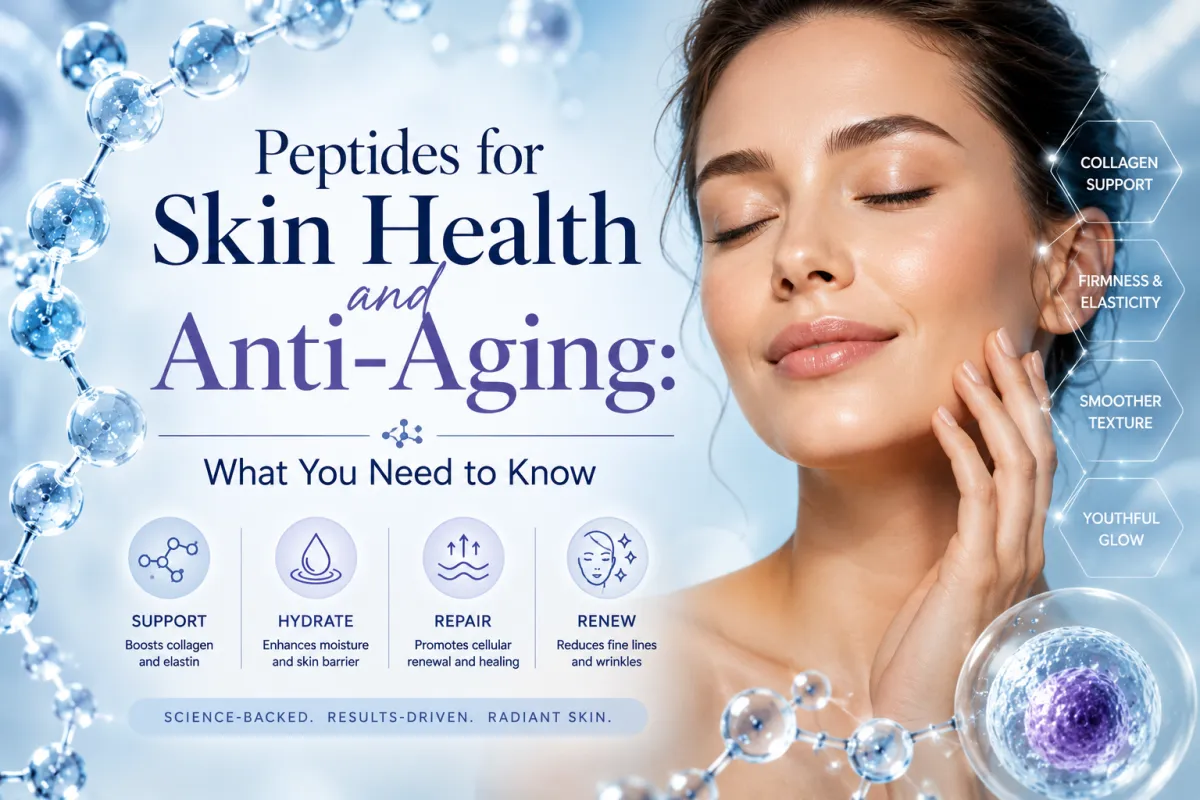
Peptides for Skin Health and Anti-Aging: What You Need to Know
If you have spent any time looking into skincare or anti-aging treatments recently, you have probably come across peptides. They show up in high-end serums, wellness clinics, and regenerative medicine conversations alike. But what do peptides actually do for your skin, and are they worth the attention they are getting?
The short answer is yes, and the science behind it is more straightforward than most people expect.
Why skin changes as we age
To understand what peptides do for skin, it helps to understand why skin changes in the first place.
Starting in your mid-to-late twenties, the body begins producing less collagen, the structural protein that keeps skin firm, smooth, and resilient. Elastin, which gives skin its ability to snap back into place, also starts to decline. At the same time, the skin barrier, which is responsible for locking in moisture and keeping irritants out, becomes less efficient over time.
The visible result of all of this is what most people call aging skin: fine lines, looser texture, dullness, uneven tone, and skin that feels less hydrated and less supple than it once did.
Peptides are one of the more promising tools being used to address these changes at a cellular level, rather than just masking them at the surface.
What are peptides and why do they matter for skin?
Peptides are short chains of amino acids, the same building blocks that make up proteins like collagen and elastin. In the skin, they act as signaling molecules, sending messages to cells that tell them to repair, produce, or protect.
When collagen breaks down in the skin, for example, the fragments it leaves behind actually function as natural peptide signals. They tell the body that repair is needed and trigger new collagen production in response. Synthetic peptides in skincare and peptide therapy are designed to mimic or amplify those same signals.
Because they are small enough to penetrate the outer skin barrier, peptides can communicate directly with the deeper layers of the skin where collagen and elastin are produced.
The main ways peptides support skin health
Not all peptides work the same way, and different types are designed to address different aspects of skin health. Here are the main categories and what they do:
Signal peptides
These are the most widely used in skincare. Signal peptides work by sending messages to skin cells to produce more collagen, elastin, or hyaluronic acid. They essentially tell the skin to behave more like it did when it was younger and more productive.
The result over time can include firmer texture, reduced appearance of fine lines, and skin that feels more hydrated and plump.
Carrier peptides
Carrier peptides help deliver important minerals like copper and manganese into the skin. Copper peptides in particular have been studied for their ability to support wound healing, stimulate collagen synthesis, and act as antioxidants that protect skin cells from environmental damage.
Neurotransmitter-inhibiting peptides
These peptides work in a different way by targeting the muscle contractions that can lead to expression lines. They are sometimes described as a gentler, topical alternative to more invasive options for softening lines around the eyes, forehead, and mouth.
Enzyme-inhibiting peptides
These peptides work by slowing down the enzymes that break down collagen and elastin in the skin. Rather than trying to produce more collagen, they help protect the collagen that is already there.
Peptide therapy vs. topical peptide skincare
There is an important distinction worth understanding between topical peptide products and peptide therapy used in a clinical wellness setting.
Topical peptides in serums and creams work at the surface level. They can improve texture, hydration, and the visible signs of aging over time, especially when used consistently as part of a thoughtful skincare routine.
Peptide therapy in a wellness or regenerative medicine context goes deeper. Certain peptides, when used as part of a personalized health protocol, can support the body's overall collagen production, repair processes, and cellular communication from the inside out. This systemic approach is often more powerful for long-term skin health because it works at the level of how the body maintains and repairs its own tissue.
For many people, the most effective approach combines both: a quality topical routine and a wellness-based peptide protocol tailored to their specific goals and health profile.
What results can you realistically expect?
Peptides are not an overnight fix, and they are not a replacement for lifestyle fundamentals like sun protection, hydration, quality sleep, and a nutrient-dense diet. But for people who already have those basics in place and want to go further, peptide-based approaches can make a meaningful difference over time.
With consistent use and the right protocol, people commonly report:
Firmer, more lifted skin texture over several weeks to months
Reduction in the depth and visibility of fine lines
Improved hydration and a more supple, healthy-looking complexion
More even skin tone and reduced redness or irritation
A general sense that their skin looks more refreshed and less tired
The timeline varies depending on the person, the specific peptides being used, and how the protocol fits into their broader health and skincare routine.
Are peptides safe for the skin?
For most people, peptides are well tolerated and have a strong safety profile compared to more aggressive skin treatments. They are generally non-irritating, which makes them suitable for sensitive skin types as well as more resilient ones.
That said, as with any therapeutic approach, quality and sourcing matter. Working with a provider who uses reputable, properly formulated products is important, especially when moving beyond basic topical skincare into clinical peptide therapy.
The bottom line on peptides for skin health
Aging skin is largely a story of declining collagen, elastin, and cellular communication. Peptides address those changes directly by sending targeted signals that support the skin's own repair and production processes.
Whether used topically or as part of a broader wellness protocol, the right peptides can help support firmer, healthier, more youthful-looking skin over time, not by masking the signs of aging, but by supporting the biology behind them.
If you are curious about whether a peptide-based skin health approach is right for you, a personalized consultation is the best place to start.