
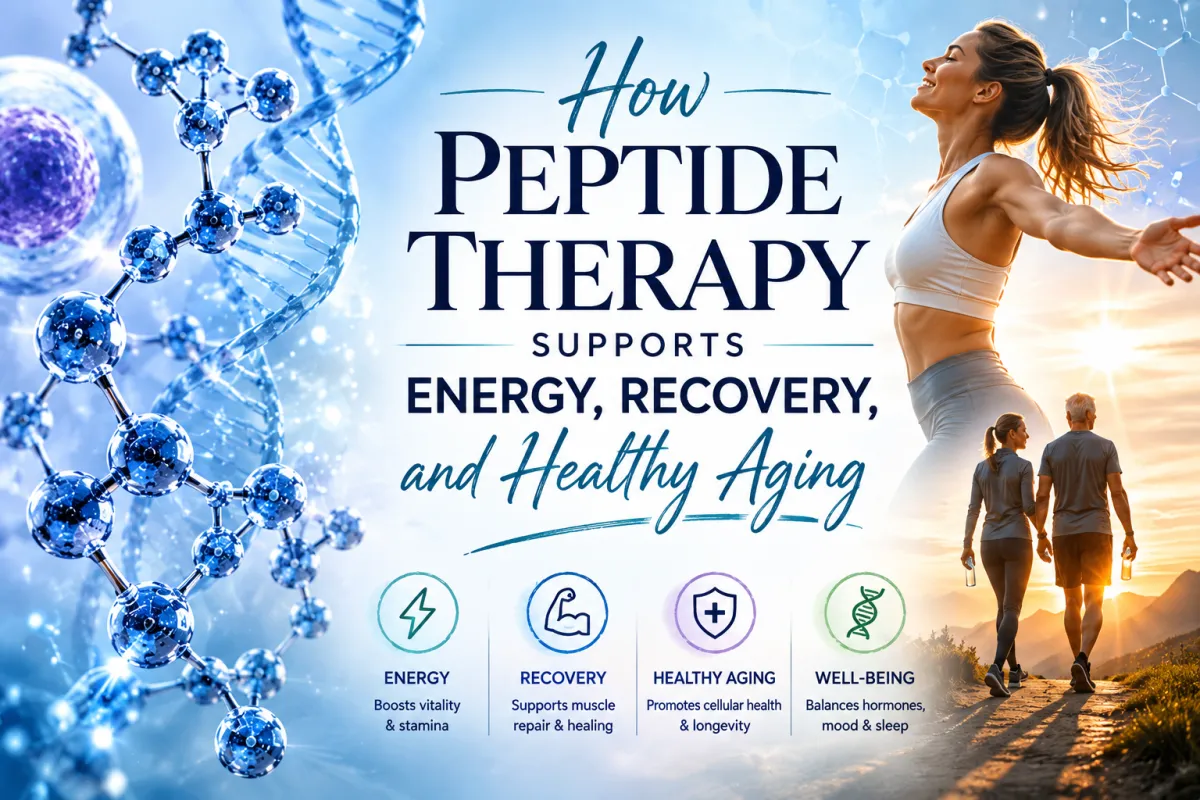
How Peptide Therapy Supports Energy, Recovery, and Healthy Aging
Once you understand what peptides are, the next natural question is: what can peptide therapy actually do for your day‑to‑day life? Many people are not looking for something extreme; they want to feel more energized, recover faster, and age in a healthier, more graceful way.
This is where peptide therapy has started to stand out. By working with your body’s own signaling systems, certain peptides may help support energy, recovery, metabolism, and long‑term vitality.
A quick refresher: what are peptides?
Peptides are short chains of amino acids that act as powerful messengers inside the body. They help coordinate many processes, including tissue repair, hormone balance, immune function, and how your cells respond to stress.
In peptide therapy, specific peptides are selected to gently influence certain pathways—such as recovery, metabolic health, or sleep quality—rather than trying to override your biology.
Benefit 1: More stable energy and vitality
One of the most common reasons people explore peptide therapy is low or inconsistent energy. Chronic stress, poor sleep, and normal aging can all affect how efficiently your body produces and uses energy.
Certain peptides are being used to support:
More efficient cellular energy production
Healthier metabolic signaling
Better quality sleep and recovery time at night
The result for many people is not a “wired” or artificial buzz, but a steadier sense of daytime energy and the feeling that the body is no longer working against them.
Benefit 2: Faster recovery from workouts and daily stress
Recovery is where real progress happens, whether you are training hard or simply trying to feel better in your everyday movement. When recovery is slow, everything else starts to feel harder.
Peptide therapy is increasingly used to support:
Muscle repair and reduced soreness after exercise
Soft‑tissue recovery after strain or overuse
Healthier inflammatory responses following physical stress
Because many peptides act on tissue repair and cellular communication, they can fit naturally into broader recovery plans that also include nutrition, hydration, and smart training.
Benefit 3: Support for metabolism and body composition
As we age, metabolic shifts can make it easier to gain fat and harder to maintain lean muscle, even with decent habits. Some peptide protocols aim to support healthier metabolism and body composition by influencing growth‑hormone–related and fat‑metabolism pathways.
In a supervised setting, certain peptides may help:
Encourage the body to use stored fat more efficiently for energy
Support lean muscle preservation when combined with exercise
Improve how the body handles blood sugar and appetite cues
Peptide therapy is not a stand‑alone magic weight‑loss solution, but it can be one more tool for people already working on nutrition, movement, and stress.
Benefit 4: Healthier skin and visible signs of aging
On the outside, certain peptides have become popular in both topical skincare and system‑wide rejuvenation programs. They are used because of their potential to signal the skin to renew, protect, and maintain its structure.
Depending on the specific peptide, benefits may include:
Support for collagen and elastin, which keep skin firm and resilient
Improved hydration and barrier function
Softer fine lines and more even tone over time
When combined with healthy lifestyle habits and sun protection, peptide‑based approaches can be a meaningful part of a long‑term skin and aging strategy.
Benefit 5: Long‑term support for healthy aging
Perhaps the most exciting area for peptides is their role in healthy aging. Rather than chasing a single “anti‑aging” fix, peptide therapy focuses on the systems that underlie how well we age—energy production, tissue repair, hormone balance, immune function, and sleep.
By gently supporting those core processes, well‑designed peptide protocols may help people:
Maintain more consistent energy and motivation
Stay active with less discomfort and slower physical decline
Protect key functions like sleep, immunity, and stress resilience over time
No therapy can stop aging, but peptides are emerging as one way to age in a more supported and intentional way.
Are peptides right for everyone?
Peptide therapy is not a one‑size‑fits‑all solution, and it is not appropriate for every person or every health situation. Proper screening, medical history, and ongoing supervision are important, especially given evolving regulations and the need to work with high‑quality, reputable sources.
The right approach usually includes:
Clear goals (such as energy, recovery, or healthy aging)
A personalized plan rather than a generic “peptide stack”
Integration with lifestyle foundations like sleep, nutrition, and movement
The bottom line on peptide therapy benefits
Peptide therapy is gaining attention because it offers a targeted, biology‑friendly way to support systems that matter for how you feel and how well you age. For many people, the most meaningful benefits show up as better day‑to‑day energy, smoother recovery, improved body composition, more resilient skin, and a sense that the body is moving toward balance instead of away from it.
If you are curious whether peptide therapy fits your goals, the next step is a thoughtful conversation with a provider who understands both the science and the human side of wellness.